How to Pack a Storage Unit Properly

What Actually Protects Your Stuff (and What Doesn’t)
Here is something we see fairly regularly. Someone moves their belongings into a storage unit with the best of intentions, loads everything in, rolls the door down, and comes back three months later to find the one thing they need is somewhere at the back behind the sofa, under a box that has partially collapsed, next to the mattress that is now a slightly different shape than it used to be.
Sound familiar? You are in good company.
The good news is that almost all of it is avoidable. Packing a self storage unit well is not complicated, but it does require a bit of thought before the van arrives rather than during the unloading. This is what actually makes the difference.
Why Storage Is Not the Same as a House Move
When you move house, your things are in boxes for a few hours. In storage they might be there for six months. That is a different situation, and it calls for a different approach.
A slightly underpackaged box will probably survive a house move without much drama. Left at the bottom of a stack for six months it will buckle, and whatever is above it comes down too. Furniture that goes in without any protection will get dusty during a move and come out the other side more or less fine. In long-term storage, without covers, fabric picks up moisture and wood surfaces get marked. These are not disaster scenarios, but they are the kind of thing you notice when you finally unpack.
A bit of preparation before you start saves a lot of regret later.
Get Proper Boxes
This is the one that catches people most often. The boxes from the off-licence or the back of the supermarket are perfectly good for moving a few things across town. They are not designed to be stacked four high under the weight of other boxes for six months. They were not built for it, and eventually they will show you that.
Purpose-built moving boxes, like the ones available at our boxes and packaging shop, are made to stack and to hold. They come in sizes that work together, so you can build a solid, stable wall rather than a wonky pile of different shapes and depths.
As a general guide: a medium box handles most general packing jobs well. A large box is good for light bulky things like duvets and cushions. Fill a large box with books and you will not be lifting it, so keep the heavy stuff in small boxes where you can manage the weight. Getting the right boxes at the start costs a lot less than replacing what gets damaged without them.
Pack Each Box Like It Is Going to Have Two More Boxes Sitting on Top of It
Because it probably will.
A half-empty box is not a stable base. Fill every box fully, using packing paper, bubble wrap, or soft things like towels and jumpers to fill the gaps. Press the top before you seal it. If it gives way under your hand, it needs more in it.
Heavy things go at the bottom of the box, lighter things on top. Books and files in the lower half, soft stuff above. Wrap anything fragile individually before it goes in. Every glass, every bit of crockery, every ornament gets its own wrap. Packed loose, things rattle around and they do not come out in one piece. It is a bit of a pain to do it properly, but it is a lot less of a pain than unpacking broken things.
Tape the base of every box before you fill it, not just the top. A taped lid and an untaped base is not a sealed box. You will find out when you pick it up.
Label Everything, and Make the Labels Actually Useful
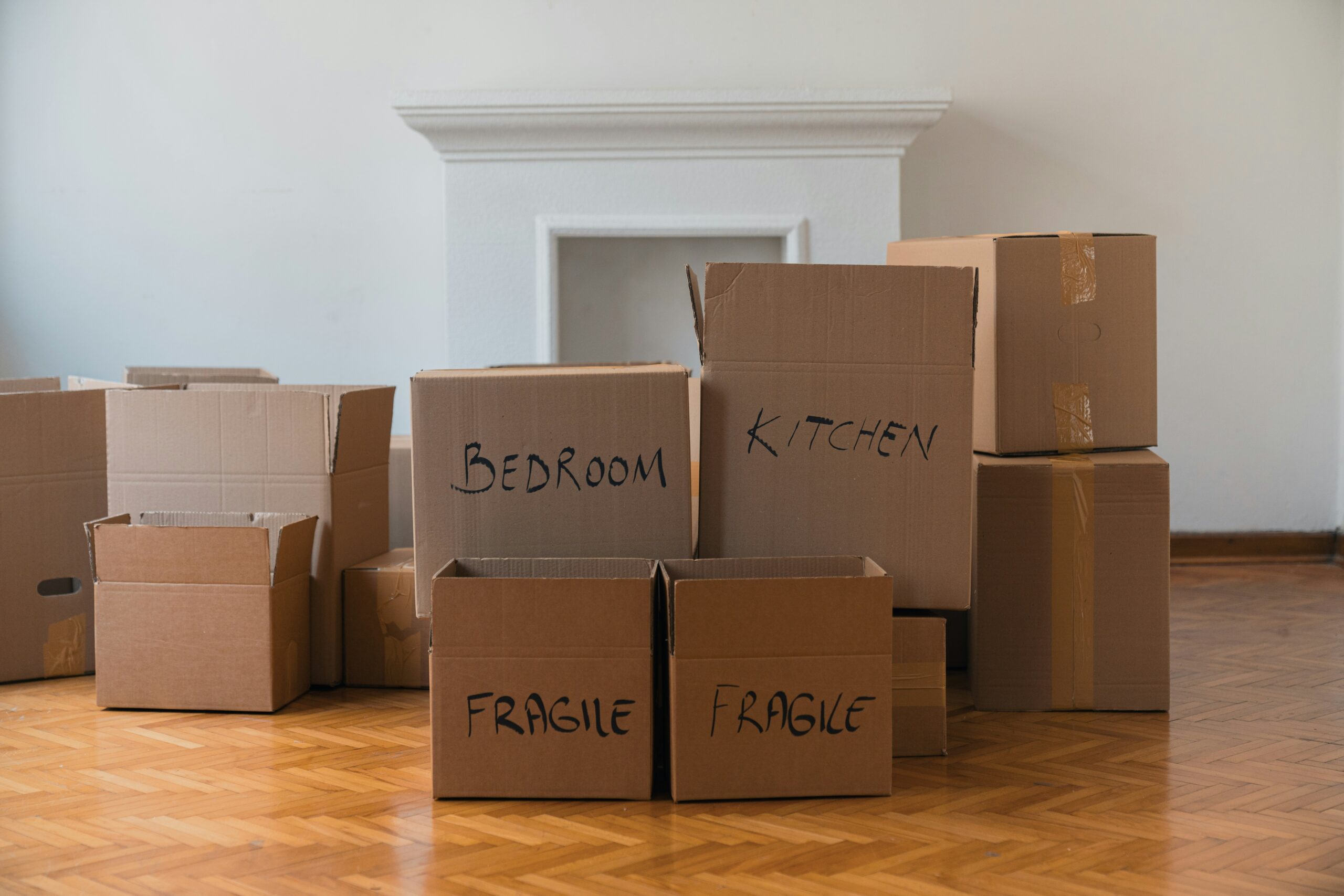
Write on at least two sides of every box. The top is invisible once boxes are stacked, so the sides are what you will be reading when you come back. Write what is in the box, which room it is from, and whether it is fragile. “KITCHEN, glasses and crockery, FRAGILE” will serve you much better six months later than “KITCHEN STUFF” or just a big question mark because you ran out of time.
If you are storing for a while, ten minutes spent writing a simple numbered list of what is in each box, kept on your phone, is worth its weight in gold the first time you need to find something without pulling the whole unit apart.
Furniture: What Actually Keeps It Safe
Sofas and upholstered pieces need to be covered. Breathable dust sheets or furniture covers are the right option here. Plastic wrapping is tempting because it feels protective, but it traps moisture against the fabric and that is where the musty smell and the damage comes from. Breathable covers let things air while keeping dust off.
Wipe down wooden furniture before it goes in and cover the surfaces. A coat of polish or wax is better than nothing if you have time.
Mattresses should go in flat where there is room. A mattress left standing upright without support on both sides for months will sag and lose its shape, and that is not something that sorts itself out when you bring it home. If it has to stand up, support it properly and keep it vertical rather than leaning.
Take apart large furniture where you can. A wardrobe in pieces takes up a fraction of the space of one standing up. Put all the screws and fittings in a labelled zip-lock bag and tape it directly to the piece it belongs to. Not in a box somewhere. Not in a general bag. Taped to the piece, so you know exactly where it is when you need it.
Glass tabletops and mirrors should be wrapped in furniture blankets or bubble wrap and stored upright. Lying flat with something on top of them is asking for trouble. Standing upright with proper padding, they are fine. For more detail on protecting specific items, the furniture storage page covers what to expect at each of our locations.
How to Load the Unit
The loading order matters nearly as much as the packing itself. Get it wrong and every visit after the first one involves moving half the unit to get to whatever you actually came for.
Big heavy pieces go in first, against the back wall and along the sides. Wardrobes, chests of drawers, large appliances, bed frames. These form the bones of the unit that everything else builds around.
Stack boxes on top of solid furniture rather than on the floor where you can. A chest of drawers is a great base for a stack of boxes. Boxes sitting on the floor can pick up damp if there is any condensation, and they are harder to reach than boxes at chest height.
Stack boxes in a brickwork pattern, each box overlapping the join between the two below it, rather than in straight vertical columns. It is more stable and it is less likely to topple.
Leave a walkway down the middle of the unit. This is the bit people skip most often and regret most reliably. It feels like wasted space when you are loading, and it is indispensable the first time you need something from the back half. Even a narrow path is enough. Build it in from the start rather than trying to create one later.
Things you are most likely to need during the rental go near the front. Think about this before you start loading, not when the van is empty and everything is already in.
Soft bags of bedding, cushions, and clothing are good for filling the awkward gaps around furniture. They squash into spaces, they are not fragile, and they keep things from shifting around.
Not sure how much space you need before you book? The self storage sizes page will give you a recommendation based on what you are storing. You can also browse self storage unit sizes with practical examples of what fits in each, which helps if you are trying to picture it before committing.
What You Cannot Store
Food and anything perishable cannot go in a storage unit. Neither can flammable or hazardous materials, including paint, solvents, gas canisters, and most cleaning products. If you are not sure about something specific, give the team a call before it goes in. The FAQ page covers the most common questions.
The Short Version
Use proper boxes. Fill them fully. Cover furniture with breathable materials. Leave a walkway. Label the sides of every box with what is actually inside.
That is genuinely most of it. Do those five things and the unit will work well for you every time you open it. Are we right?
Frequently Asked Questions
What is the best way to stack boxes in a storage unit?
Heavy boxes at the bottom, lighter ones on top. Fill every box fully so it can take the weight of what is stacked on it. Build stacks in a brickwork pattern rather than straight vertical columns. Where possible, stack on top of solid furniture rather than directly on the floor.
Do I need special boxes for long-term storage?
Not special, just sturdy. Supermarket and off-licence boxes are not built for months of weight stacking on them. Proper packing boxes, available at our boxes and packaging shop, are made for exactly this.
How do I stop furniture getting damaged in storage?
Cover upholstered furniture with breathable dust sheets, not plastic. Wipe down and cover wooden surfaces. Store mattresses flat or properly supported if they have to stand. Disassemble large pieces where you can, and wrap glass surfaces in blankets or bubble wrap before standing them upright.
Should I wrap everything individually?
Fragile things, yes. Every glass, every piece of crockery, every ornament should be wrapped individually before going in a box. For everything else, good solid packing and full boxes matters more than individual wrapping.
What is the biggest packing mistake people make?
Not leaving a walkway. It seems like wasted space at the time, and it becomes a problem the first time you need something that is not right at the front. Plan the path in from the start.
Stocking up before you move in? Browse packing supplies at Storage World, or get a quick quote for a unit today.