HOW TO CHOOSE THE RIGHT SELF STORAGE UNIT SIZE
Here’s a situation we see fairly regularly. Someone books a self storage unit, fills it, and then realises there’s a good third of the space sitting empty. They’ve been paying for a medium unit when a small one would have done the job fine.
It goes the other way too. Someone books a small storage space, arrives with a van that turns out to be significantly fuller than anticipated, and has to do a stressful reshuffle on the spot.
Getting the size right before you move anything is one of those things that sounds obvious but genuinely saves people money and hassle. This guide will help you work it out without any guesswork.

WHY SIZE MATTERS MORE THAN PEOPLE EXPECT
Self storage is priced by the square foot. A unit that’s twice the size costs roughly twice as much. If you rent for six months and book a unit that’s 40% bigger than you needed, you’ve paid quite a bit of money for empty air.
Pack too much into a storage unit that’s too small and you’ve got a different problem entirely. Everything is inaccessible, items get damaged from being stacked badly, and every visit turns into an excavation project.
The sweet spot is a unit where your belongings fit comfortably, with enough room to move around and reach what you need without dismantling the whole thing to find the one box you’re after.
WHAT FITS IN EACH SIZE OF STORAGE UNIT
Small units (roughly 9 to 25 sq ft)
Think of this as a large wardrobe or a generous walk-in cupboard. It’s the right choice for student storage. Think belongings between semesters, seasonal items like Christmas decorations and garden furniture cushions, sports gear that’s taken over the hallway, a small number of boxes from a one-bedroom flat, or business documents and small equipment.
It’s not the right choice for large pieces of furniture. If you need to store a sofa, a double bed, or a wardrobe, you’ll need to step up. But for the kind of thing most people have sitting in a spare room wondering what to do with it, a small unit is often exactly enough.
Small units at Storage World start from €8 per week, which surprises people fairly regularly.
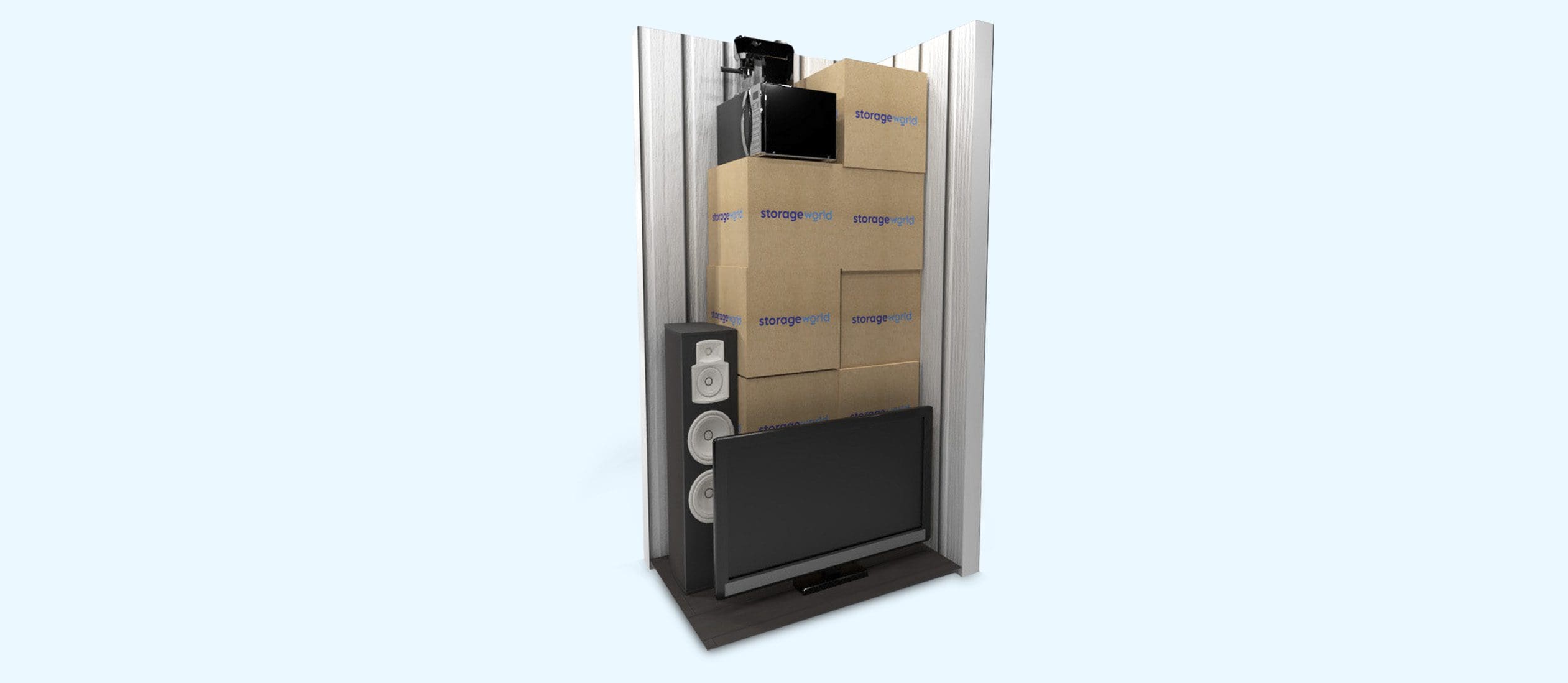
Medium units (roughly 35 to 75 sq ft)
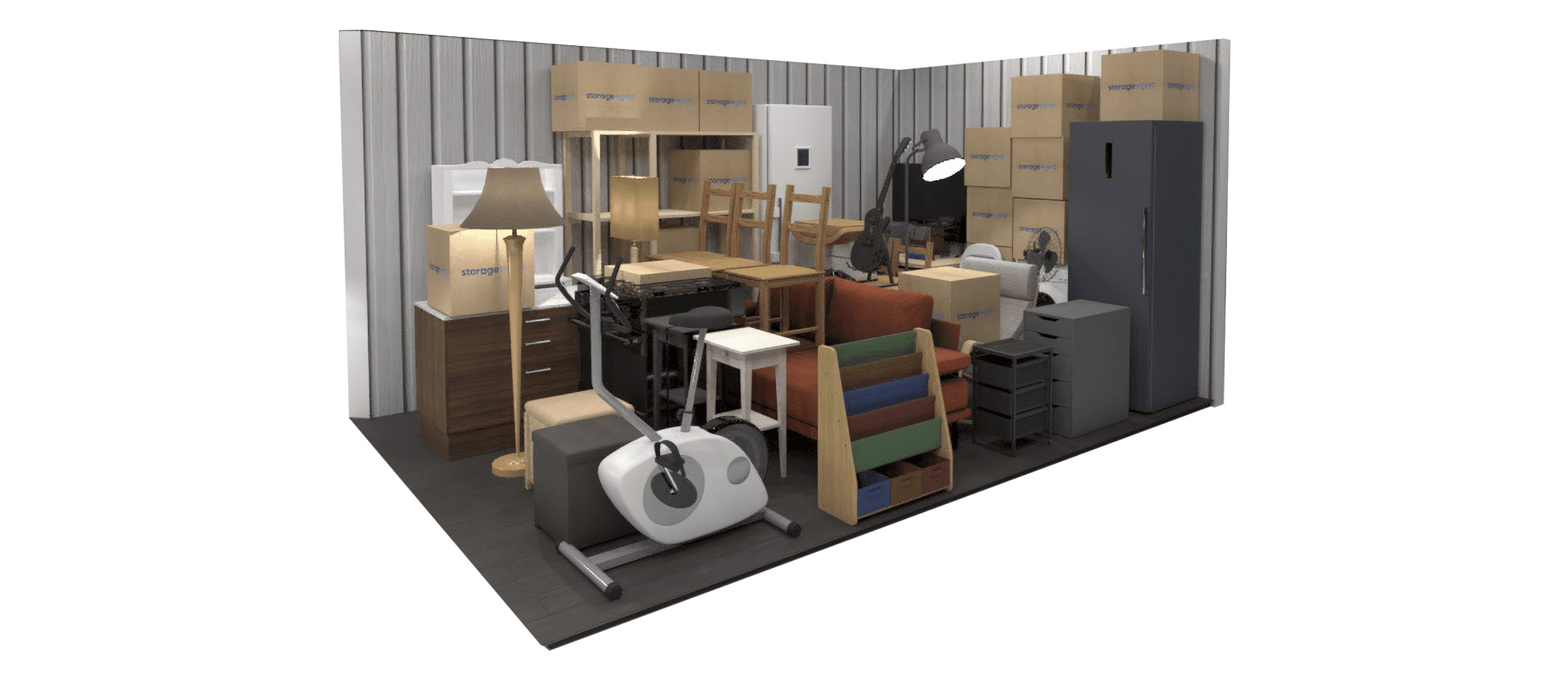
Think of this as a decent-sized garden shed or a one-car garage with room to move. The full contents of a one-bedroom apartment fit comfortably here, including furniture. Two or three rooms’ worth of furniture storage, a small business’s storage for equipment, or everything from a renovation room that needs to move out temporarily all suit a medium unit well.
This is by far the most popular size range at Storage World. If you’re in a one-bed or two-bed Dublin apartment and need somewhere for the overflow from a downsized move, a medium unit is almost certainly what you’re looking for.
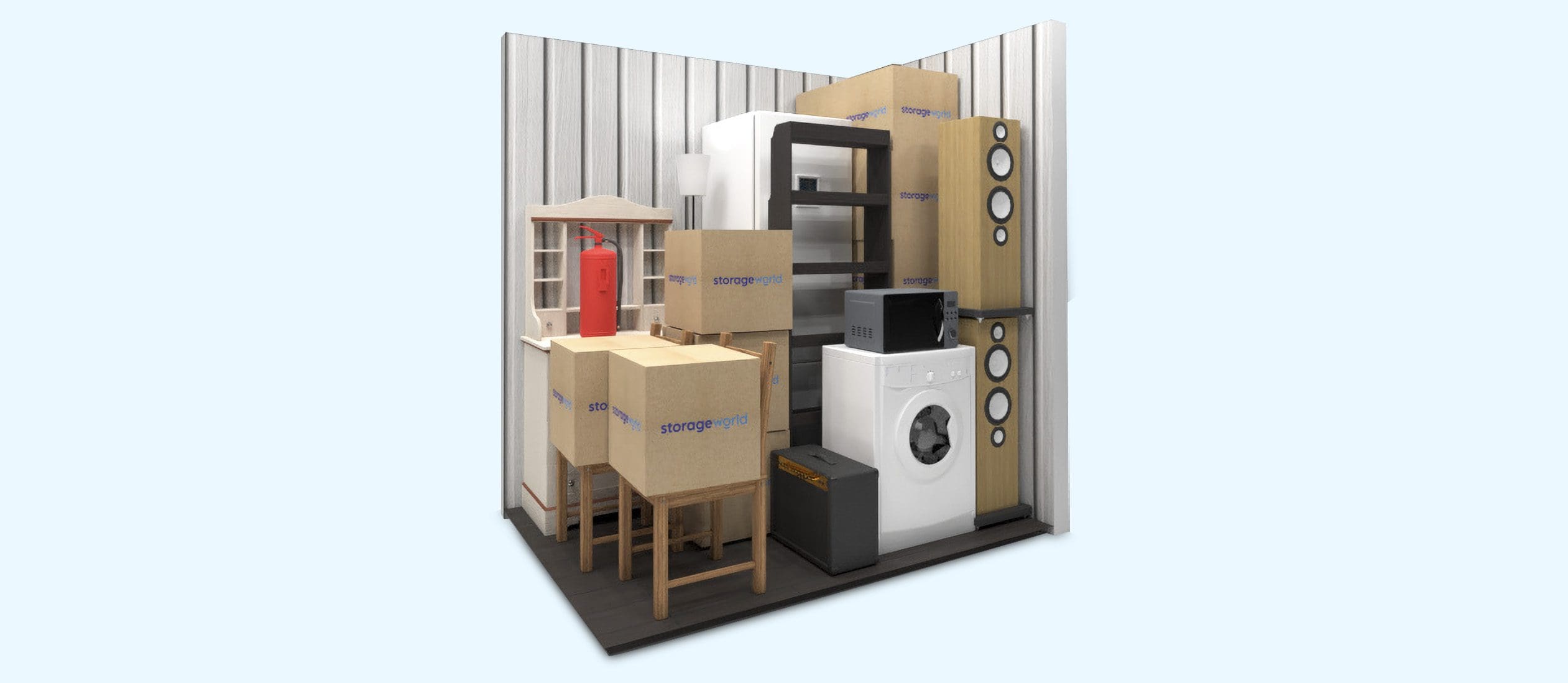
Large units (roughly 100 sq ft and above)
Think of this as a double garage, or a room you can actually walk around in properly. The full contents of a three or four-bedroom house during a move belong here, as does significant business stock, large furniture collections, or the entire ground floor of a home during a renovation.
Large units are most common among people in the middle of a house move where there’s a gap between selling and buying, and businesses that need off-site space for stock they can’t keep on site. The team will walk you through the options within this range if you’re not sure what fits.
HOW TO WORK OUT WHAT SIZE YOU ACTUALLY NEED
The quickest method is the storage size estimator. You put in what you’re planning to store and it gives you a recommendation. Two minutes, no commitment required.
If you’d rather work it out yourself, the approach is straightforward. Start with the big items first: sofas, beds, wardrobes, tables, white goods. These are the space-hungry ones and they define what size you’re working with. Then count your boxes. A standard cardboard box is roughly half a cubic foot, so twenty boxes is about ten cubic feet before you’ve added a single piece of furniture.
Think vertically too. Storage units have height as well as floor space, and you can stack boxes safely to about six feet. Using that height effectively doubles your floor capacity, which makes a real difference.
Leave a walkway down the middle of the unit. It sounds like a luxury but it isn’t. If you can’t reach the back without moving everything at the front, you’ll regret it the first time you need something that’s not in the first two boxes.
When in doubt between two sizes, go up. Moving to a larger unit after you’ve already loaded everything in is considerably less fun than it sounds.
THE MISTAKES PEOPLE MAKE (AND HOW TO AVOID THEM)
The most common one is booking a bigger unit to be safe and then not filling it. We understand the logic, but it costs real money over a few months. If the size estimator says small, book small. You can upgrade if you genuinely need to.
Forgetting to measure the furniture is another one. A double mattress is big. A large corner sofa is very big. A wardrobe with the doors still attached is surprisingly big. Measure the large items before you book, not after the van is loaded.
Underestimating the boxes is near-universal. “I only have a few boxes” becomes twenty-three boxes with reliable consistency. Be honest with yourself when making the list.
And then there’s the plan to sort through everything once it’s in storage. You won’t. Store it organised, label it clearly, and put the things you’re most likely to need near the front. The version of you who comes to collect in three months will be grateful.

FREQUENTLY ASKED QUESTIONS
How do I know if I need a small, medium, or large unit?
Use the storage unit size estimator. It’s the fastest way to get a sensible answer based on what you’re actually storing. As a rough guide: small (9 to 25 sq ft) for boxes and seasonal items; medium (35 to 75 sq ft) for one or two rooms of furniture and contents; large (100 sq ft and above) for full house moves or significant business stock.
What fits in a 25 sq ft storage unit?
A 25 sq ft storage unit is roughly the size of a large walk-in wardrobe. It will comfortably hold student belongings, seasonal items, sporting equipment, and several boxes. It’s not designed for large furniture. If you need to store a sofa or a bed alongside your boxes, step up to a medium unit.
Can I upgrade my unit size later if I need more space?
Yes. Talk to the team at your facility if you realise you’ve underestimated. Moving to a larger unit is straightforward in most cases. That said, it’s easier to get the size right from the start, which is why the estimator is worth two minutes of your time before you book.
What’s the cheapest way to store a one-bed flat’s contents in Dublin?
A medium storage unit (35 to 50 sq ft) will typically hold the contents of a one-bedroom apartment, including furniture. The size estimator will give you the most accurate picture. Combine that with one of our promotional offers and it’s often more affordable than people expect.
Does the Storage World size estimator work for unusual items?
Yes, for most things. If you’ve got something genuinely unusual, the estimator is a good starting point, but call the team directly at our Sandyford, Dublin City Centre or Limerick facilities for anything out of the ordinary. They can give you a better steer than any online tool for the genuinely tricky cases.
Not sure what size you need? Try the storage unit size estimator or get a quick quote for any of our three locations. Two minutes, no commitment.
Unlock the freedom of extra space.